


Dalit Widow in Mulnapur Accuses Lekhpal: Case of Encroachment on Disputed Land; Appeals to DM for Justice
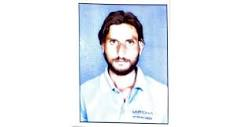
Rahul (32), a contractual sanitation worker from the Valmiki community, died on March 30 while manually desilting an 8–to 10-feet-deep drain in Tahirpur, Dilshad Garden, allegedly without any safety gear, supervision, or mechanised support.
The incident, which occurred under the jurisdiction of the Public Works Department, has raised serious questions about illegal manual scavenging practices, caste-based labour exploitation, and institutional accountability.
According to findings by a fact-finding team from Dalit Adivasi Shakti Adhikar Manch (DASAM), Rahul had gone to collect two months of unpaid wages on the morning of the incident but was allegedly coerced into cleaning the hazardous drain, with payment conditional on completing the task.
Witnesses and family members claim that he was forced to enter the toxic environment without protective equipment, exposing him to lethal gases such as methane and hydrogen sulphide.
Rahul and a co-worker began the work from 8 am and by 2 pm, he was found unresponsive inside the drain.
Rescue operations reportedly took nearly two hours, and he was declared dead on arrival at Guru Teg Bahadur Hospital.
His family was informed only hours later, around 5 pm by an unknown person, raising concerns about official delay and insensitivity.
Police initially registered a case at Seemapuri Police Station but did not include key provisions of the Prohibition of Employment as Manual Scavengers and the Rehabilitation Act, and the SC/ST (Prevention of Atrocities) Act.
These sections were reportedly added later following pressure from the family and civil society groups.
Authorities have since invoked provisions under the Bharatiya Nyaya Sanhita, including Section 106 (causing death by negligence), but no arrests had been made at the time of reporting.
Family members have alleged that Rahul’s death was not accidental but the result of toxic gas exposure and unsafe working conditions.
They also raised suspicions of evidence tampering, noting that his body was found in clean clothes, contrary to standard conditions of sewer work.
“We sent Rahul at 8 in the morning to collect his pending salary, but instead of paying him, the contractor told him to first clean the drain and only then he would get his two months’ wages”, Rahul’s sister said in conversation with DASAM.
“We never imagined this would lead to his death. This tragedy happened because of toxic fumes, hazardous conditions, and the negligence of the contractor and the PWD”, she added.
“It has been three days, and no one has come to us, not from the department, not any official, not even the contractor. We received his body on March 31”, she further said.
“He was found dead in the drain around 2 p.m., and the police took nearly two hours to recover him and bring him to Guru Teg Bahadur Hospital, where he was declared dead. We were not informed by anyone, neither the contractor nor co-workers. Someone else told us around 5 pm and we were asked to rush to the hospital.”
Rahul’s brother Vijay said, “When people clean drains, they usually wear only underwear, but Rahul was found in full clothes, and they were clean. He was forced into death for wages. We suspect the contractor tried to remove evidence,” said Vijay.”
A sewer worker, Jayvir said, “Workers were given no safety equipment at all,” noting that Rahul earned just 350 rupees a day.
“He was the youngest in our family, with five brothers and one sister, and he was unmarried. Some people even threatened us to remove the contractor’s name, but the best officer assured us that justice would be done. The police kept pushing for cremation, but we refused until we were given assurance of 30 lakh rupees compensation”, Vijay said.
The case has drawn attention to the continued existence of manual scavenging despite its legal prohibition and repeated judicial interventions.
In its 2023 ruling, the Supreme Court of India increased compensation for sewer deaths to 30 lakh rupees and reiterated the state’s obligation to eradicate the practice.
Activists argue that Rahul’s death highlights a persistent gap between legal safeguards and their implementation.
The fact-finding report by DASAM also points to a multilayered system of contractors and subcontractors, allowing state agencies to deflect responsibility.
“While the work fell under the PWD, officials have reportedly distanced themselves by attributing operational control to private contractors, a practice critics say enables systemic evasion of accountability”, National Coordinator of the organisation, Mohsina Malik told Maktoob.
She added, “We along with the family demanded compensation, accountability, and the immediate arrest of the contractor, but the authorities kept refusing. It was only after sustained pressure from the SDM, MLA Kuldeep, and organisations like DASAM that the administration began to respond and included the appropriate sections in the FIR.”
Malik said, “So far compensation had been promised but not disbursed. No arrests had been made. The investigation remains ongoing.”
The fact-finding team recommended immediate arrest of all responsible contractors and officials, along with the payment of ₹30 lakh compensation in line with guidelines laid down by the Supreme Court of India.
It also called for interim financial relief and rehabilitation support for the family, strict enforcement of the Prohibition of Employment as Manual Scavengers and the Rehabilitation Act, and mandatory mechanisation of all sewer and drain cleaning work.
The recommendations emphasised the need to eliminate informal subcontracting chains and clearly fix principal employer liability, while ensuring provision of safety gear, proper training, and supervision.
Further, it urged formalisation of employment through written contracts, timely payment of wages, and access to social security and insurance for workers.
The report also demanded criminal liability for officials permitting illegal manual scavenging, regular independent audits of sanitation work, and public disclosure of contractor details and working conditions.
Additionally, it called for awareness campaigns on the prohibition of manual scavenging, training for police and municipal authorities, and community-level initiatives to promote safe sanitation practices.
Rahul, the youngest of six siblings, earned between 300 and 400 rupees per day under precarious employment conditions.
His family delayed his cremation until assurances of compensation were made.
The last rites were conducted on April 1, but compensation had not been fully disbursed at the time of reporting.
Activists and legal experts have called for immediate arrests, full compensation as mandated by the Supreme Court, and strict enforcement of anti-manual scavenging laws.
They also demanded an end to informal contracting systems and the mandatory mechanisation of all sanitation work.
Ghazala Ahmad
Courtesy : Maktoob Media
Note: This news is originally published on https:/maktoobmedia.com/bha and is used purely for non-profit/non-commercial purposes, especially human rights