39 die in custody in first 3 months of 2026: HRSS report
UPDATED 12 April 2026,
At least 39 inmates died in prisons across the country in the first three months of this year, according to a quarterly human rights monitoring report by the Human Rights Support Society (HRSS).
Among the deceased were 16 convicts and 23 undertrial prisoners. Of them, 12 were leaders and activists of the Awami League and its associate bodies, while the remaining 27 were general inmates.
The HRSS prepared the January–March 2026 report based on its own findings and reports published in 16 national media outlets.
According to the report, Proloy Chaki, 60, Pabna district AL cultural affairs secretary and singer, died in custody on January 12, with his family alleging inadequate treatment.
Former water resources minister Ramesh Chandra Sen died on February 7 after falling ill in jail. He was later declared dead at Dinajpur Medical College Hospital. He had been in Dinajpur District Jail in three cases since his arrest on August 16, 2024.
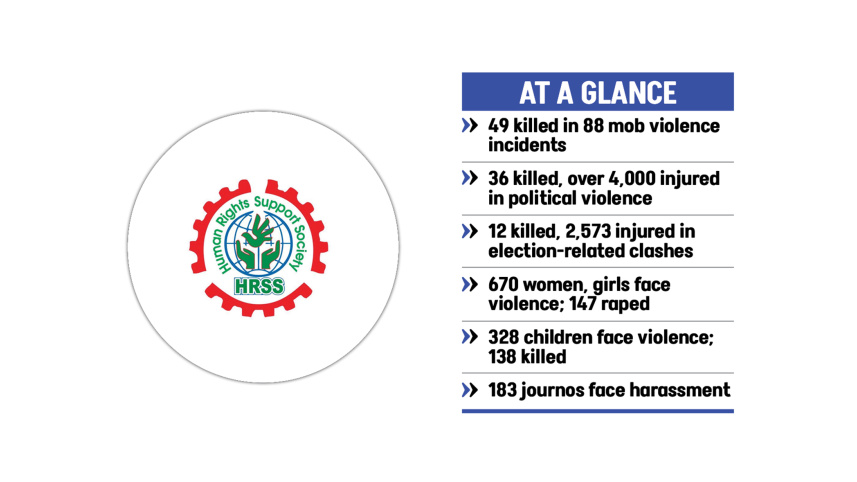
The report also highlighted mob violence, stating that at least 49 people were killed in 88 incidents during the three months.
It said one man was beaten to death in Magura on January 7 over suspected cattle theft, another in Pabna on January 13, two in Gaibandha on February 20 over alleged robbery, and two in Munshiganj on March 4 after being tied to a tree and beaten over alleged theft.
The HRSS said the January–March period was a time of concern in terms of political transition and the human rights situation in Bangladesh.
It noted that the February 12 parliamentary election under the interim government and the February 17 swearing-in of the new government created an opportunity for political continuity, but violence before and after the polls contributed to insecurity.
According to the report, at least 36 people, including 28 BNP members, were killed and 4,078 injured in 610 incidents of political violence during the period. It said 94 percent of the incidents stemmed from internal conflicts within the BNP and clashes with activists of other parties.
Regarding election-related violence, the report said at least 12 people were killed and 2,573 injured in 395 incidents surrounding the 13th parliamentary polls.
On press freedom, the report said 183 journalists faced harassment in 82 incidents. Cases were filed against eight journalists under the Cyber Security Ordinance 2025.
During the period, 34 people were accused in seven cases under the same ordinance, while four were arrested. Two people were detained over “objectionable” Facebook posts about Prime Minister Tarique Rahman.
In incidents related to criticism of other political figures, one person was killed, one injured, one detained, and four cases were filed.
The report said 670 women and girls faced violence during the three months. Of them, 147 were raped, and 52 percent of the victims were children and adolescents. Nine victims were killed after rape.
It also reported that 328 children were subjected to violence, including 138 who were killed.
According to the HRSS, at least 31 people were injured in 27 attacks on minority communities. The report also noted vandalism of four temples, two idols, and 19 houses, along with three incidents of land grabbing and 10 cases of property damage.
It further said at least 76 cases were filed during the period against leaders and activists of the Awami League, BNP, and Jamaat, including the ousted prime minister Sheikh Hasina. More than 21,000 people were accused in those cases.
Nearly 6,000 people were arrested in drives by joint forces, most of whom were leaders and activists of AL and the banned Chhatra League.
On the border situation, the report said one person was killed and 11 injured in attacks by the Indian Border Security Force (BSF).
It also said nine-year-old Huzaifa Afnan, who was injured in firing from across the Myanmar border, later died while undergoing treatment.
The HRSS expressed concern over the cancellation of several key ordinances issued during the interim government, including those related to a referendum, Supreme Court judge appointments, an independent secretariat, the ACC, the National Human Rights Commission, and the prevention of enforced disappearances.
It called for coordinated efforts to strengthen the rule of law and constitutional rights, warning that unless mob violence, political tension, and restrictions on freedom of expression are addressed, the human rights situation may worsen.