


MP: Social activist Amit Bhatnagar, arrested before the march, has been in police custody for two days! The movement against the Ken-Betwa project will intensify.
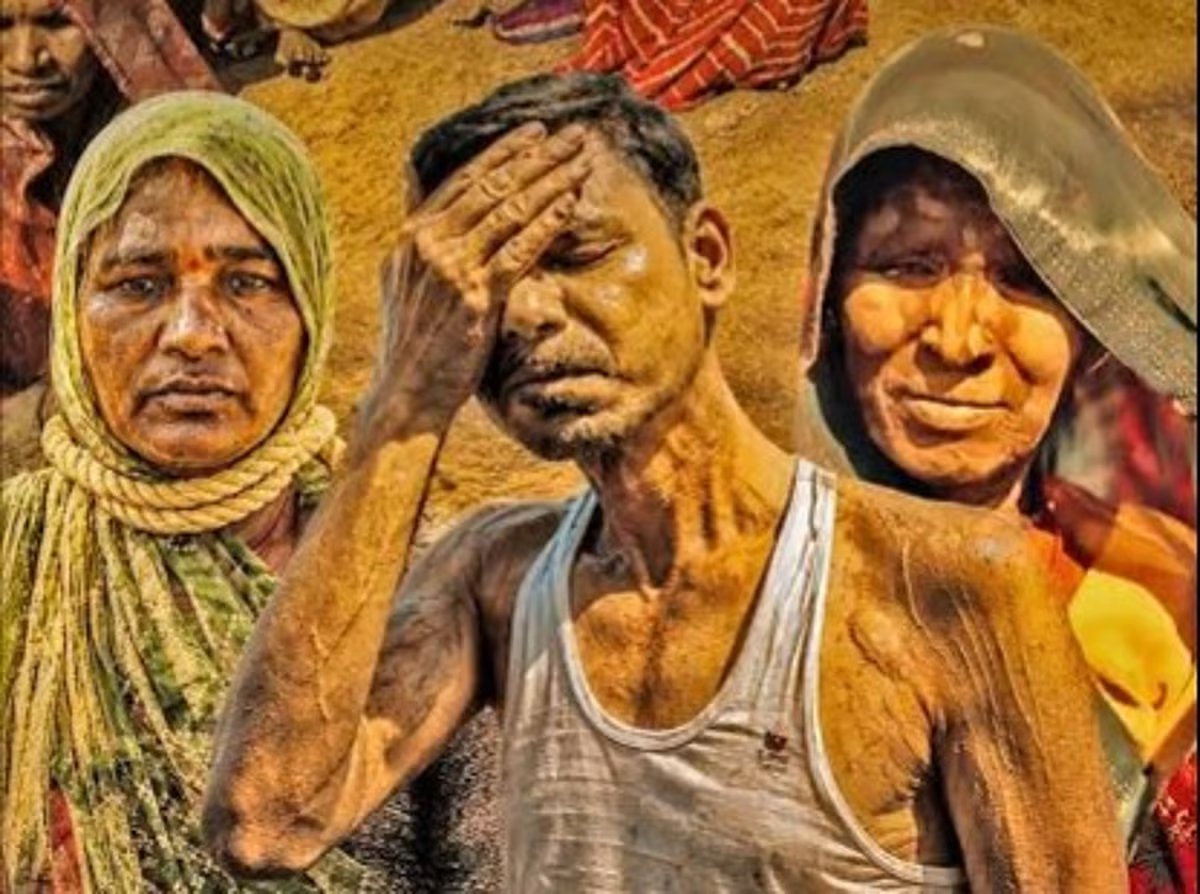
A new struggle emerged over rehabilitation, compensation, and water, forest, and land.
Published on: May 10, 2026, 11:17 am
Bhopal. The ongoing protests against the Ken-Betwa Link Project in Madhya Pradesh’s Panna and Chhatarpur districts have intensified. There is widespread resentment among protesting farmers and tribal families after social activist Amit Bhatnagar was arrested by Panna police on the night of May 8th. The arrest came just hours before the planned “Nyay Adhikar Padyatra” (rights march) under the banner of the Jai Kisan Sangathan. Protesters are calling this an attempt to suppress the movement.
Bhatnagar has long stood with the people of villages affected by the Ken-Betwa Link Project. He has consistently raised the issue of the project threatening the land, forests, livelihoods, and social existence of thousands of people, while the rehabilitation and compensation processes are not transparent. He alleges that land acquisition and construction work proceeded without completing the statutory process of Gram Sabhas.
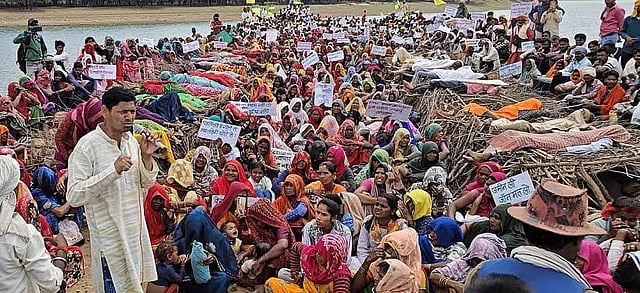
Amit Bhatnagar in the Ken-Betwa movement Internet
Emotional messages on social media after arrest
Immediately after his arrest, Amit Bhatnagar shared a post on Facebook, stating that he was being detained by the Bijawar police station in-charge from the Kupia area and taken to Panna. He wrote, “Let me rot in jail, hang me, but don’t let the movement weaken. I am proud to go to jail to protect our water, forests, land, the lives of thousands of people, the Constitution, and democracy.”
He entrusted the responsibility of continuing the movement in his absence to village-level struggle committees and local women’s leadership, including Bijawar Ward No. 9 councilor Divya Ahirwar. Following the arrest, protests and anger have increased in the villages of the submerged area. Villagers say they will now launch a larger-scale movement.
When and how did the movement start?
The movement, which began in February 2026, gradually grew widespread. In February, women from Daudhan and Palkoha villages began protesting at the dam construction site over compensation and survey irregularities. The protesters alleged that land was not properly evaluated and that many families were excluded from the list.
On February 8, the administration asked the protesters for a month’s time and promised a new survey. However, the next day, Amit Bhatnagar was detained under Section 191 of the Indian Penal Code for unlawful assembly. Thousands of villagers protested against this on February 10 at the Bijawar tehsil office. Protesters allege that the police used water cannons and later resorted to lathicharge, affecting women and children. After his release on February 12, Bhatnagar demanded that the district administration release certified copies of all FIRs and CCTV footage.
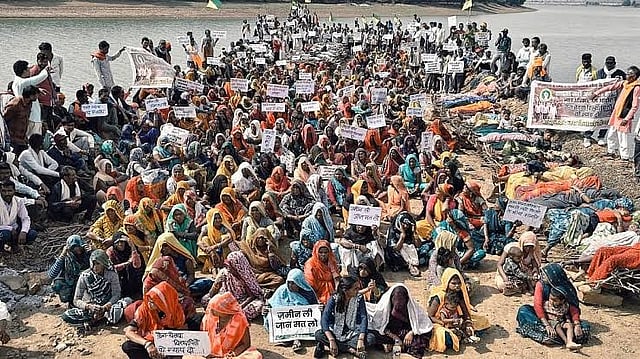
Tribal farmers and villagers protesting
The movement took a violent turn in March and April.
On March 11 and 12, thousands of farmers and tribal villagers marched to the Panna Collectorate. The administration invoked Section 163 of the Indian Civil Services Code (BNSS). Clashes broke out between police and protesters, and reports of lathicharge emerged. Although the administration later provided written assurances that documents related to land acquisition, Gram Sabha, and compensation would be provided within five days, protesters say the promises were not implemented.
The movement intensified in April. Protesters organized protests such as water satyagraha, hunger strikes, symbolic pyre marches, and symbolic hangings. Women in several villages halted construction work. A continuous sit-in continued at the Runjh Dam construction site.
What are the main demands of the villagers?
The main demand of the affected villagers is fair compensation and dignified rehabilitation. Villagers in the Daudhan area are demanding at least 2.5 million rupees in compensation for each family. Villagers say the current compensation amount is far below the actual market value of the land.
Villagers are also demanding that all adult family members, especially daughters and women, be treated as separate family units and compensated. Women say that if all the money is given only to men, their futures and those of their children will be insecure.
In addition, the protesters are also questioning the Gram Sabha process. They allege that the consent procedures required under the Panchayat (Extension to Scheduled Areas) Act, also known as the PESA Act, and the Forest Rights Act in tribal areas have not been followed. Many villages claim that their actual Gram Sabhas never took place and that the documents were fabricated.
Government’s stand and new committees
The Madhya Pradesh government says that after the project is completed, thousands of farmers in the Bundelkhand region will receive irrigation facilities and the drinking water crisis will be alleviated. According to the government, the Majhgay and Runjh projects will irrigate approximately 27,510 hectares of land in 86 villages and benefit approximately 45,000 farmer families.
On April 22nd, a cabinet meeting chaired by Chief Minister Dr. Mohan Yadav decided to increase the rural land acquisition compensation multiplier. Under this, farmers will now receive compensation up to four times the market value.
Subsequently, on May 4, the state government formed a state-level committee to investigate complaints regarding displacement and rehabilitation. However, protesters say that numerous committees and assurances have been made before, but they have had no impact on the ground.
Many big questions still remain
Amit Bhatnagar’s arrest has given the entire movement a new political and social dimension. While the government is presenting the project as a solution to Bundelkhand’s development and water crisis, the affected villagers see it as a threat to their existence, culture, and rights.
The biggest question remains: Was the statutory Gram Sabha process completed properly? Is the compensation in line with current market value? Will the displaced families receive dignified rehabilitation? And will the administration make public all the documents that villagers have been demanding for months?
Currently, work is halted at the Runjh Dam construction site, while construction has resumed at the Daudhan Dam. Protests continue in the villages, and affected tribal families say their struggle will not end until their demands are met.
What is Ken-Betwa Link Project?
The Ken-Betwa Link Project is India’s first river linking project. Its objective is to divert water from the Ken River to the Betwa River to alleviate water scarcity in the Bundelkhand region. The first phase of the project involves the construction of the Daudhan Dam within the Panna Tiger Reserve.
According to government data, when the dam reaches its full filling capacity of 288 meters, approximately 9,000 hectares of land will be submerged. This includes 5,258 hectares of forest land. Ten villages will be directly affected by the project.
Additionally, controversy and protests continue regarding the Majhgay Medium Irrigation Project and the Runjh River Project. The Majhgay Project affects eight villages, while the Runjh Project affects Vishramganj and Bhujbai villages in Ajaygarh tehsil of Panna district.