


Odisha: How did the road built for Vedanta’s mine lead to a bloody clash between the police and tribals?
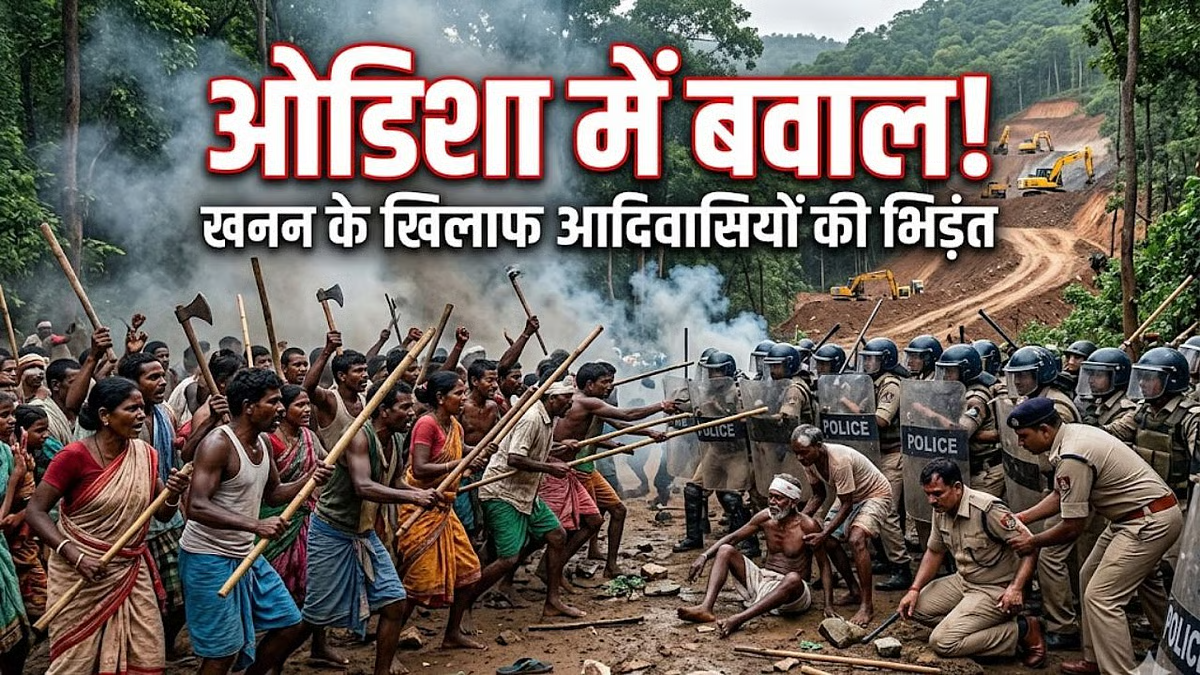
Violence erupts in Odisha’s Rayagada over Vedanta’s bauxite mine; 65 injured in a massive clash between tribals and police. Know the real reason behind this entire controversy.
Published on: April 10, 2026, 12:43 pm
New Delhi: A violent clash broke out between rural tribal communities and police near Odisha’s Rayagada district on Tuesday. At least 40 policemen and 25 local residents were injured in the intense confrontation. According to officials, the immediate cause of the violence was the construction of a three-kilometer-long access road to the Sijimali bauxite mine in Kashipur.
However, the opposition to this road reflects the deep discontent that has been simmering since the mine was awarded to Vedanta Limited through auction in 2023.
The approval granted for this mining project has been mired in controversy from the outset. The district administration claims that gram sabhas were held in all eight affected villages on December 8, 2023, under the Forest Rights Act.
According to the administration, the villagers unanimously approved the project in these meetings. Based on this, Vedanta has submitted its proposal to the central government for final mining approval.
On the other hand, local residents have vehemently rejected the administration’s claims. They allege that the Gram Sabhas were held fraudulently and their signatures were forged.
Villagers have staged repeated protests against the project, fearing the mine will completely destroy their livelihoods. Meanwhile, Vedanta says it has received Stage 1 forest clearance from the central government and aims to start the project by next year.
This Stage-1 approval is conditional, requiring the company to comply with afforestation regulations and complete formalities such as depositing funds for diversion of forest land.
The Sijimali region is part of the Eastern Ghats mountain range and is nestled among valleys. This bauxite deposit covers a vast area of 1,500 hectares in the Rayagada and Kalahandi districts. It is estimated to hold 311 million tons of high-quality bauxite.
The Sijimali mine is geographically close to Vedanta’s alumina refinery in Lanjigarh, Kalahandi district. This bauxite ore is used to extract alumina, which is used to produce aluminum.
Due to its exceptional strength, lightness, and conductivity, aluminum is used in everything from cold drink cans to airplanes. It is the third most common element and the most abundant metal on Earth’s surface, after oxygen and silicon.
Odisha alone accounts for 41 percent of India’s total bauxite resources, according to data from the 2022 Yearbook of the Indian Bureau of Mines. The state was the country’s largest producer in 2021-22, accounting for approximately 73 percent of total production.
Apart from bauxite, Odisha has about 17 per cent of India’s total mineral reserves, which include important minerals like high-quality iron ore, coal, nickel, precious stones and graphite.
Vedanta is not new to tribal opposition in this region. Previously, the company faced significant opposition in its attempt to extract bauxite from the nearby environmentally sensitive Niyamgiri Hills. The Dongaria Kondh, a Particularly Vulnerable Tribal Group (PVTG), resides there, and they worship the Niyamgiri forest as “Niyam Raja,” or God.
At that time, Vedanta and the state-owned Odisha Mining Corporation had formed a joint venture to mine for the Lanjigarh refinery. However, in 2010, the central government refused to grant Stage-2 approval for the use of 660 hectares of forest land.
Subsequently, in 2013, the Supreme Court issued a landmark ruling that the project required the approval of gram sabhas. Later that year, all 12 gram sabhas unanimously rejected the mining plan, sparking widespread opposition.